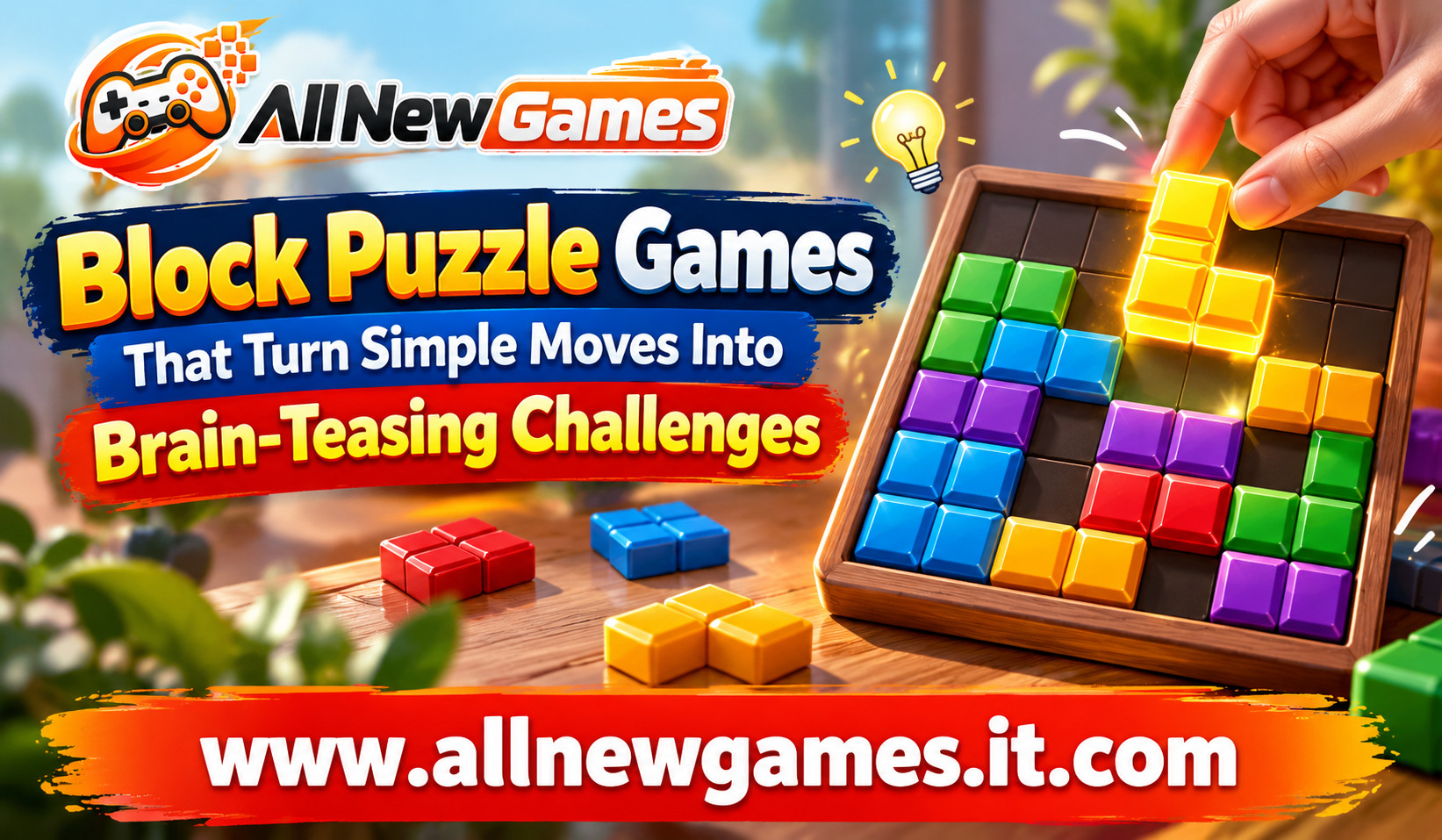
Some games capture your attention with complicated stories, impressive graphics, and competitive gameplay. Others keep you entertained with nothing more than a few shapes and an empty grid. Block Puzzle Games belong to the second category, yet they can deliver surprisingly challenging experiences. With every move, you must think about space, patterns, placement, and your next possible combination.
What makes these games interesting is their simplicity. You usually drag or place different-shaped blocks onto a board, complete rows or columns, and create space for additional pieces. However, as the board fills up, even a small placement decision can affect your entire strategy. One careless move may leave you with limited options, while a well-planned arrangement can help you continue playing for much longer.
Whether you enjoy casual mobile gaming or want activities that encourage logical thinking, block puzzles offer an accessible challenge. You can play for a few minutes during a break or spend more time trying to beat your previous score. Let us explore what makes these games enjoyable, how they challenge your thinking, and which features make them worth trying.
What Makes Block Puzzle Games So Engaging?
The appeal of block puzzles comes from their straightforward gameplay. Most versions provide a grid and a selection of differently shaped blocks. Your task is to fit these pieces into available spaces without creating an arrangement that prevents future placements.
Unlike games that require extensive tutorials, you can understand the basic rules within minutes. Nevertheless, mastering the gameplay requires patience and careful planning.
Simple Rules With Increasing Difficulty
At the beginning, placing blocks feels relatively easy because the board has plenty of open spaces. You can experiment with different positions and discover how individual shapes fit together.
However, the challenge gradually increases as you fill the grid. Larger blocks may become difficult to place, narrow spaces can limit your choices, and certain arrangements may prevent you from completing additional lines.
This gradual increase in difficulty makes every round interesting. You understand what you need to accomplish, but finding the best solution becomes increasingly complicated.
Every Move Creates New Possibilities
One of the most interesting aspects of block puzzle gameplay is that every placement changes the board.
For example, placing a small square might appear convenient, but it could occupy the only space available for a longer block. Similarly, leaving a large empty area may seem harmless until the next pieces arrive.
Therefore, you must consider more than the immediate result. Thinking about what your next move might look like makes the experience more strategic.
How Block Puzzle Games Challenge Your Brain
Block puzzles are entertaining because they encourage you to evaluate different possibilities before making a decision. Although they are casual games, their mechanics involve several types of problem-solving.
1. Spatial Awareness and Visual Thinking
Spatial awareness is the ability to understand how objects relate to one another in a particular space. Block puzzles naturally encourage this skill because you must recognize shapes, compare dimensions, and identify suitable positions.
For instance, an L-shaped block may fit into an empty corner, while a straight piece might complete a narrow gap. You need to visualize how each shape will interact with the existing arrangement.
As you play, you become more familiar with recognizing possible placements without testing every available position.
2. Logical Thinking and Decision-Making
Every block placement involves a decision. You must compare the available options and consider which arrangement creates the most useful result.
Suppose you have three available pieces: a small square, a long horizontal block, and an L-shaped piece. You might be tempted to place the smallest block first because it fits easily.
However, saving a particular area for the longer piece could be a smarter decision.
This process encourages you to compare short-term benefits with possible future consequences. It also makes each round feel like a small problem-solving exercise.
3. Planning Ahead
Successful gameplay often depends on thinking beyond the current move.
Instead of asking whether a block fits somewhere, consider whether placing it there will preserve enough room for upcoming pieces. Keeping flexible spaces available can prevent the board from becoming difficult to manage.
Planning ahead becomes especially important when the grid is nearly full. At this stage, one poorly considered move can reduce your available options considerably.
4. Patience and Concentration
Block puzzle games also encourage focused attention. You need to observe the board, examine available shapes, and avoid rushing through placements.
Although some versions include timers or limited challenges, many traditional formats allow you to take your time.
This makes them suitable for players who enjoy thoughtful gameplay rather than fast-paced competition.
However, you should view these games as entertainment rather than a proven method of improving intelligence or preventing cognitive decline.
Popular Types of Block Puzzle Games to Explore
Not every block puzzle follows exactly the same rules. Different formats introduce unique mechanics, creating experiences that suit different playing preferences.
1. Classic Grid-Based Block Puzzles
Classic block puzzles usually provide a square grid and several pieces that you can place wherever they fit.
Your objective is generally to complete horizontal or vertical lines. Once a line is completed, the game removes it and creates additional space.
These games are ideal if you prefer relaxed gameplay with straightforward rules. You can focus on arranging pieces efficiently without worrying about complicated controls.
2. Falling Block Puzzles
Falling block puzzles introduce an additional challenge because pieces descend automatically. You must rotate and position them before they reach the bottom.
Tetris is one of the best-known examples of this format. Its gameplay requires quick decisions, spatial awareness, and an understanding of how different shapes fit together.
Unlike traditional placement puzzles, falling-block games also test your ability to respond under time pressure.
3. Blast-Style Block Puzzles
Blast-style puzzles often combine colorful blocks, line-clearing mechanics, and score-based objectives.
Some games provide several pieces at once, allowing you to select where each one should go. Completing multiple lines or clearing larger sections may help you earn higher scores, depending on the game’s rules.
These versions appeal to players who enjoy colorful interfaces and satisfying visual effects.
4. Shape-Fitting and Tangram Puzzles
Shape-fitting puzzles challenge you to arrange geometric pieces inside a particular outline.
Unlike traditional grid-based games, the main objective is often to complete a specific shape rather than clear rows and columns.
Tangram puzzles are a familiar example. They encourage you to experiment with angles, proportions, and different combinations until all pieces fit.
Smart Strategies to Improve Your Block Puzzle Gameplay
Understanding the rules is only the beginning. If you want to achieve better scores and keep your board manageable, developing a consistent strategy can make a noticeable difference.
Keep Important Spaces Open
One common mistake is filling every available gap without considering future pieces.
Instead, try to maintain enough open space for larger shapes. A flexible board gives you more opportunities to place different combinations.
For example, avoid creating several isolated one-cell gaps because many larger blocks cannot fit into them.
Prioritize Difficult Shapes
Some blocks are easier to place than others. Small squares and short pieces often fit into multiple positions, while long or irregular shapes may require more specific spaces.
Therefore, examine all available pieces before choosing your first placement. Consider positioning the most difficult shape while suitable space remains available.
Look for Multiple Line Combinations
Clearing one row or column creates additional space. However, arranging blocks to complete multiple lines in a single move can be even more rewarding in games that support combination clears.
For this reason, observe how different placements interact with existing rows and columns.
Avoid Rushing Your Decisions
Speed does not always lead to better results. If your game does not impose a timer, take a moment to examine the board before placing each piece.
Use these practical habits to improve your approach:
- Check all available pieces before making your first move.
- Avoid leaving unnecessary gaps between blocks.
- Preserve open areas for larger shapes.
- Consider how each placement affects your next possible move.
Features That Make Modern Block Puzzle Games Enjoyable
Modern mobile block puzzles offer more than basic shape placement. Developers introduce additional features to make repeated gameplay feel rewarding.
| Feature | Why It Matters |
| Daily challenges | Give you new objectives to complete. |
| Score tracking | Help you compare your performance. |
| Multiple difficulty levels | Let you choose a suitable challenge. |
| Helpful hints | Provide guidance when you feel stuck. |
| Offline gameplay | Allow you to play without an internet connection when supported. |
| Visual themes | Offer different backgrounds and block designs. |
Daily Challenges and Achievements
Daily challenges give you a reason to return to a game. They may introduce specific scoring targets, limited moves, or different board arrangements.
Achievements can also make progress more satisfying by recognizing completed objectives and personal milestones.
Customization and Relaxing Sound Effects
Some games let you change background colors, block designs, and visual themes. These options make the interface feel more personal.
Additionally, gentle sound effects and simple animations can create a relaxing experience. However, if you prefer playing quietly, many mobile games also provide sound controls.
Offline Accessibility
Offline support is another useful feature, particularly when you want entertainment during travel or in places with unreliable internet access.
Nevertheless, offline availability depends on the individual game. Some features, such as leaderboards, cloud synchronization, and daily rewards, may still require an internet connection.
Why Block Puzzle Games Suit Different Types of Players
One reason these games remain popular is their broad appeal. You do not need advanced gaming experience to understand their basic mechanics.
If you are a casual player, you can enjoy a quick round whenever you have spare time. The simple controls also make these games approachable for people who do not regularly play video games.
For strategy enthusiasts, the challenge comes from optimizing every placement and finding ways to keep the board open.
Students may also enjoy shape-fitting puzzles as recreational activities involving visual reasoning. Similarly, adults can use them as a short entertainment break between everyday responsibilities.
However, the best experience comes from choosing a difficulty level that feels enjoyable rather than frustrating.
How to Choose the Right Block Puzzle Game
With so many puzzle formats available, selecting one depends on your preferred gameplay style.
Before installing a game, consider the following factors:
- Gameplay mechanics: Decide whether you prefer placing blocks freely, arranging falling shapes, or completing geometric patterns.
- Difficulty options: Look for games that offer different challenge levels.
- Advertisements: Check whether advertisements interrupt gameplay and whether an ad-free option is available.
- Internet requirements: Choose an offline-compatible option if you want to play without a connection.
- Privacy and permissions: Review the application’s permissions and privacy information before installation.
You should also check recent player reviews and the game’s update history. These details can help you understand whether the experience is suitable for your expectations.
FAQs About Block Puzzle Games
1. What are Block Puzzle Games?
Block Puzzle Games are casual puzzle experiences in which you arrange differently shaped pieces on a grid or board to complete patterns, clear lines, or fill specific spaces.
2. Do Block Puzzle Games require an internet connection?
Many block puzzle games support offline gameplay, although features such as leaderboards, advertisements, and online challenges may require internet access.
3. Are block puzzles good for improving problem-solving skills?
They provide opportunities to practise spatial reasoning, logical decision-making, and planning, although their long-term cognitive benefits should not be overstated.
4. What is the best strategy for playing block puzzles?
A useful strategy is to examine all available pieces, preserve open spaces, prioritize difficult shapes, and consider how each placement affects future moves.
5. Can beginners enjoy block puzzle games?
Yes. Most block puzzles have simple instructions and intuitive controls, making them accessible to beginners while still offering challenging levels for experienced players.
Conclusion
Block Puzzle Games demonstrate how simple mechanics can create surprisingly engaging challenges. With just a grid and a collection of geometric shapes, you get an experience that encourages visual thinking, logical decisions, and careful planning.
From classic grid-based puzzles to falling-block challenges and tangram-style arrangements, each format offers a different way to test your abilities. Moreover, features such as daily challenges, score tracking, and offline support make these games convenient for everyday entertainment.
The next time you want something enjoyable that does not require complicated controls or a long learning process, consider trying a block puzzle. Start with simple placements, learn to recognize useful patterns, and gradually develop your own strategies. You may discover that the smallest move can make the biggest difference in your next puzzle challenge.