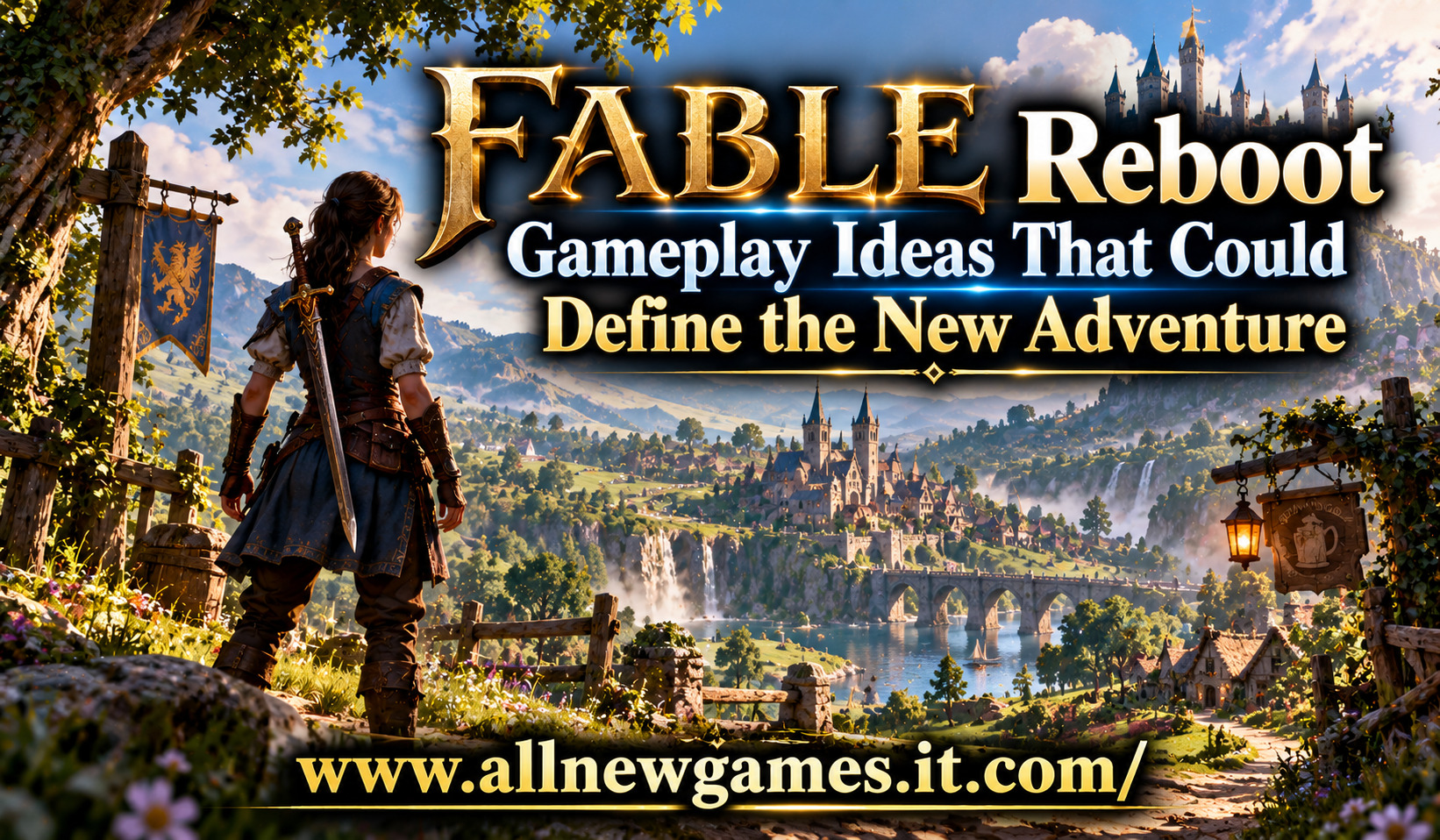
The upcoming Fable reboot could bring a fresh approach to fantasy role-playing games by combining an open world, meaningful decisions, flexible combat, and the series’ trademark British humor. Developed by Playground Games, the new adventure returns players to Albion, a fantasy kingdom filled with unusual characters, dangerous creatures, and choices that can influence how people perceive the hero, Players who enjoy immersive role-playing games can also explore Persona 4 Revival Features That Could Attract New Players to learn how its updated graphics, engaging characters, and mystery-driven story could attract a new generation of RPG fans.
Unlike a direct continuation of the original trilogy, the new Fable is designed as a fresh beginning. Its developers are rebuilding the world and its gameplay systems for modern audiences while retaining familiar elements such as morality, player freedom, and humorous interactions. Official gameplay showcases have already demonstrated an expansive Albion, a reactive population, and combat that combines melee weapons, ranged attacks, and magic.
The game is scheduled to launch on February 23, 2027, for Xbox Series X|S, PC, PlayStation 5, and supported cloud platforms. It is also planned for Xbox Game Pass on launch day. Recent gameplay demonstrations have offered a closer look at its quests, character interactions, and combat.
As anticipation grows, several gameplay ideas stand out as potential defining features of this new adventure. Some are already confirmed, while others represent possibilities that could make the final experience even more engaging.
1. An Open World That Reacts to Player Decisions
One of the biggest changes in the new Fable is its fully open-world interpretation of Albion. Earlier entries featured distinct locations and structured adventures, but the reboot aims to make the kingdom feel more connected and responsive to the player’s actions.
According to Playground Games, Albion’s inhabitants have their own routines, relationships, and opinions. They are not simply background characters waiting to provide quests. Their responses can change depending on what the hero does, including actions that might appear insignificant during an ordinary playthrough.
This system could make exploration feel more personal. Helping a villager, creating trouble in a town, or developing a reputation for generosity may influence how people respond during future encounters. Rather than relying exclusively on major story decisions, the game can use everyday interactions to establish the player’s identity.
The developers have also explained that some decisions can leave physical evidence in the world or affect parts of its environment. These consequences could make Albion feel less like a static fantasy setting and more like a place that remembers the hero’s actions.
The biggest challenge will be ensuring that these reactions remain meaningful throughout the adventure. If the world consistently responds to player behavior, even small encounters could become memorable stories that distinguish one playthrough from another.
2. A Morality System Based on Reputation Rather Than Simple Good and Evil
Morality has always been a defining feature of Fable, but the reboot approaches the idea differently. Instead of relying on a straightforward scale that labels the protagonist as good or evil, the new system focuses on reputation and how other characters interpret the hero’s behavior.
This approach reflects a more complicated view of morality. An action that earns admiration from one group might attract criticism from another. The game can therefore create situations where the player must consider whose opinion matters and what kind of reputation they want to build.
For example, a wealthy landowner might be respected by some villagers while being disliked by tenants who believe their rents are unfair. A hero who behaves generously in public could still be judged differently by someone who has experienced their less admirable decisions.
The developers have explained that witnessed actions contribute to reputation. This makes the people of Albion important participants in the morality system because their judgments help shape the hero’s identity.
If implemented consistently, this could create more interesting role-playing opportunities than choosing between obviously good and obviously bad dialogue options.
Players could experiment with different personalities, knowing that their actions may influence relationships, public opinion, and the way certain situations unfold. The result could be a more flexible system in which there is no single universally approved way to become a hero.
3. Combat That Combines Melee, Ranged Attacks, and Magic
The reboot’s combat system is another feature that could define the new adventure. Playground Games has demonstrated a combat approach that allows players to combine melee weapons, ranged attacks, and magical abilities rather than treating them as completely separate fighting styles.
This system could make battles more fluid and encourage players to adapt to different enemies. A sword might be effective against a nearby opponent, while a ranged weapon could help control enemies at a distance. Magic can add another tactical option, particularly when facing groups of creatures.
The ability to weave these approaches together is important because it offers flexibility without requiring players to commit to one narrow combat style. Someone who prefers direct attacks could emphasize melee weapons, while another player might rely more heavily on ranged combat and spells.
Enemy variety will also influence how successful the system becomes. Familiar creatures such as Hobbes, Balverines, and Trolls are returning, alongside new threats. Different attack patterns and enemy strengths could encourage players to change tactics rather than repeat the same moves throughout the game.
A successful implementation should make combat approachable for newcomers but still rewarding for players who enjoy mastering timing, positioning, and combinations. If encounters consistently encourage experimentation, battles could become one of the reboot’s strongest features.
4. A Living Population With Individual Stories
Albion’s population could be one of the game’s most distinctive systems. Playground Games has described its approach to NPCs as a living population, with characters designed to have routines, relationships, jobs, and personal activities.
This is a significant opportunity for a role-playing game built around player choice. Villagers who feel like individuals can make the world more convincing, particularly when they react to the hero’s behavior over time.
The developers have explained that characters may respond to smaller interactions as well as major story decisions. Their relationships can also influence how situations develop, meaning the player’s actions may have consequences beyond a single conversation.
Imagine returning to a town after completing a difficult quest and discovering that certain residents have changed their opinions about the hero. A friendly character might become suspicious after witnessing questionable behavior, while another might become more supportive after receiving help.
These possibilities could encourage players to revisit familiar places instead of treating towns as temporary stops between missions.
However, the system’s success will depend on the quality of its interactions. A large population alone cannot make a world feel alive if every character repeats a small number of generic responses. Distinct personalities, believable routines, and varied reactions will be essential to making Albion’s inhabitants memorable.
5. Freedom to Build a Life Beyond Heroic Quests
Fable has traditionally offered more than combat and main-story missions, and the reboot continues that approach. Official game information highlights opportunities to own property, pursue work such as blacksmithing, develop romantic relationships, and build a family.
These activities could help distinguish Fable from fantasy RPGs that focus almost entirely on defeating enemies and completing quests.
The idea of building an ordinary life within a dangerous fantasy world creates an interesting contrast. Players might spend one part of an adventure battling a powerful creature and another part managing a business or visiting familiar residents.
Property ownership could also connect with the game’s reputation systems. A character’s behavior as a landlord, for instance, might affect how local residents perceive them. Economic decisions could become another way to express personality rather than simply a method of accumulating money.
The developers have also highlighted the possibility of becoming wealthy through different occupations and pursuing relationships with villagers. These options suggest that the game is designed to let players shape an identity beyond their combat abilities.
The most effective version of this system would make these activities feel connected to the wider world. If economic choices, relationships, and reputation influence one another, players could develop a distinctive role within Albion instead of following an identical path outside the main story.
6. Quests That Mix Fantasy, Humor, and Consequences
Fable’s identity has always depended on its unusual combination of traditional fantasy and irreverent humor. The reboot appears determined to preserve that balance, presenting a world where serious events can exist alongside ridiculous situations.
The game’s early narrative setup involves a mysterious stranger who freezes an entire village, giving the protagonist a reason to begin investigating. Later gameplay footage has offered a closer look at quests in Bowerstone, Albion’s reimagined capital.
This setting provides opportunities for quests that go beyond fighting enemies or collecting objects. A mission might involve competing interests between residents, a strange local problem, or a decision in which every available option has an unexpected drawback.
Humor can make these encounters more memorable, especially when the game allows players to influence their outcomes. An amusing decision could affect the hero’s reputation, while a seemingly minor interaction might create a complication later.
The key is variety. If quests consistently combine character-driven storytelling, meaningful decisions, and unexpected outcomes, the world could remain engaging even during quieter stretches between major battles.
A strong quest design would also allow players to approach situations in different ways. Combat should remain an option, but conversation, exploration, and personal choices could provide equally interesting routes through certain encounters.
7. Character Customization and Different Approaches to Role-Playing
The reboot also includes character customization, giving players the opportunity to create a hero whose appearance reflects their preferences. Combined with its reputation systems and flexible combat, this could help make each adventure feel more personal.
Customization is most effective when it complements meaningful choices rather than functioning as a purely cosmetic feature. Players who can create their own character and then develop a distinct personality through their actions have more opportunities to establish an individual identity.
The new Fable’s approach to morality supports this idea. Since the game emphasizes how people perceive the protagonist, players can experiment with different ways of presenting themselves and behaving around others.
Some may prefer to become respected figures who help the population, while others might enjoy playing a more selfish or unpredictable character. The game’s humor could make these contrasting approaches entertaining rather than simply rewarding or punishing the player.
The developers have not revealed every customization option or the full extent of its effects. Still, the combination of appearance choices, combat flexibility, relationships, and reputation offers a foundation for a role-playing experience that supports different play styles.
8. An Open World Filled With Meaningful Exploration
Albion’s environments are designed to encourage exploration, from forests and villages to the larger streets of Bowerstone. Recent gameplay demonstrations have highlighted a detailed world in which players can enter buildings and purchase houses, providing more opportunities to interact with locations rather than simply passing through them.
This level of access could make exploration more rewarding. Buildings might contain characters, shops, quests, or other details that help establish the identity of each settlement.
However, a large world is not automatically an engaging one. The most successful open-world experiences make exploration worthwhile through interesting encounters, useful discoveries, and environmental storytelling.
Fable could benefit from connecting these elements to its wider reputation and NPC systems. Exploring a neighborhood might reveal a character’s routine, uncover a local disagreement, or introduce an opportunity that becomes relevant later.
The series’ humor also creates room for unexpected discoveries. Not every location needs to contain a serious quest or a major reward; some of the most memorable moments could come from unusual characters and absurd situations.
If exploration consistently provides variety and surprises, Albion could become a world players enjoy inhabiting rather than simply traversing on the way to the next objective.
Gameplay Features That Could Define the Fable Reboot
| Gameplay feature | What makes it important |
| Reactive open world | Allows player actions to influence the environment and its inhabitants |
| Reputation-based morality | Makes character judgments more subjective and nuanced |
| Combined combat styles | Encourages flexible use of melee, ranged attacks, and magic |
| Living population | Gives villagers routines, relationships, and individual responses |
| Property and professions | Supports activities beyond the main quest |
| Choice-driven quests | Creates opportunities for different outcomes and memorable stories |
| Character customization | Helps players create a more personal hero |
| Detailed exploration | Makes towns, buildings, and surrounding environments more engaging |
Final Thoughts
The Fable reboot has the potential to stand out through its combination of responsive world design, reputation-based morality, flexible combat, and opportunities to build a life beyond the main storyline. These systems are most promising when considered together: the hero’s actions can influence relationships, those relationships can affect reputation, and reputation can shape how Albion responds.
The return of British humor and familiar fantasy creatures should also help preserve the series’ distinctive personality. At the same time, the new open world and updated role-playing mechanics give Playground Games room to introduce ideas that feel appropriate for a modern audience.
The biggest challenge will be making these systems work consistently throughout the adventure. A reactive world needs meaningful reactions, combat needs variety, and player decisions need consequences that feel understandable rather than arbitrary.
If the finished game delivers on those ambitions, Fable could offer an adventure where the most memorable moments are not limited to major battles or dramatic story twists. They could also emerge from an unexpected conversation, an unpopular decision, a new relationship, or a ridiculous encounter in the streets of Albion.
Frequently Asked Questions
1. What is the Fable reboot?
The new Fable is an open-world action RPG developed by Playground Games. It is a fresh beginning for the franchise, returning players to Albion with a new story, updated gameplay systems, and familiar elements such as humor, morality, and player choice.
2. What gameplay features have been confirmed?
Confirmed features include an open-world Albion, character customization, combat combining melee, ranged attacks, and magic, a reputation-focused morality system, a living population of NPCs, property ownership, professions, and relationships.
3. How does morality work in the new Fable?
The reboot moves away from a simple good-versus-evil scale. Instead, the game emphasizes witnessed actions and the opinions of Albion’s inhabitants, allowing different characters to judge the same hero in different ways.
4. Will players be able to own houses and businesses?
Official game information confirms property ownership and activities such as working as a blacksmith. Players can also build relationships and pursue family life, offering ways to develop an identity outside the main quest.
5. When will the Fable reboot be released?
Fable is scheduled to launch on February 23, 2027, for Xbox Series X|S, PC, and PlayStation 5. It is also planned for Xbox Game Pass on launch day. Premium Edition early access is scheduled to begin February 18, 2027.