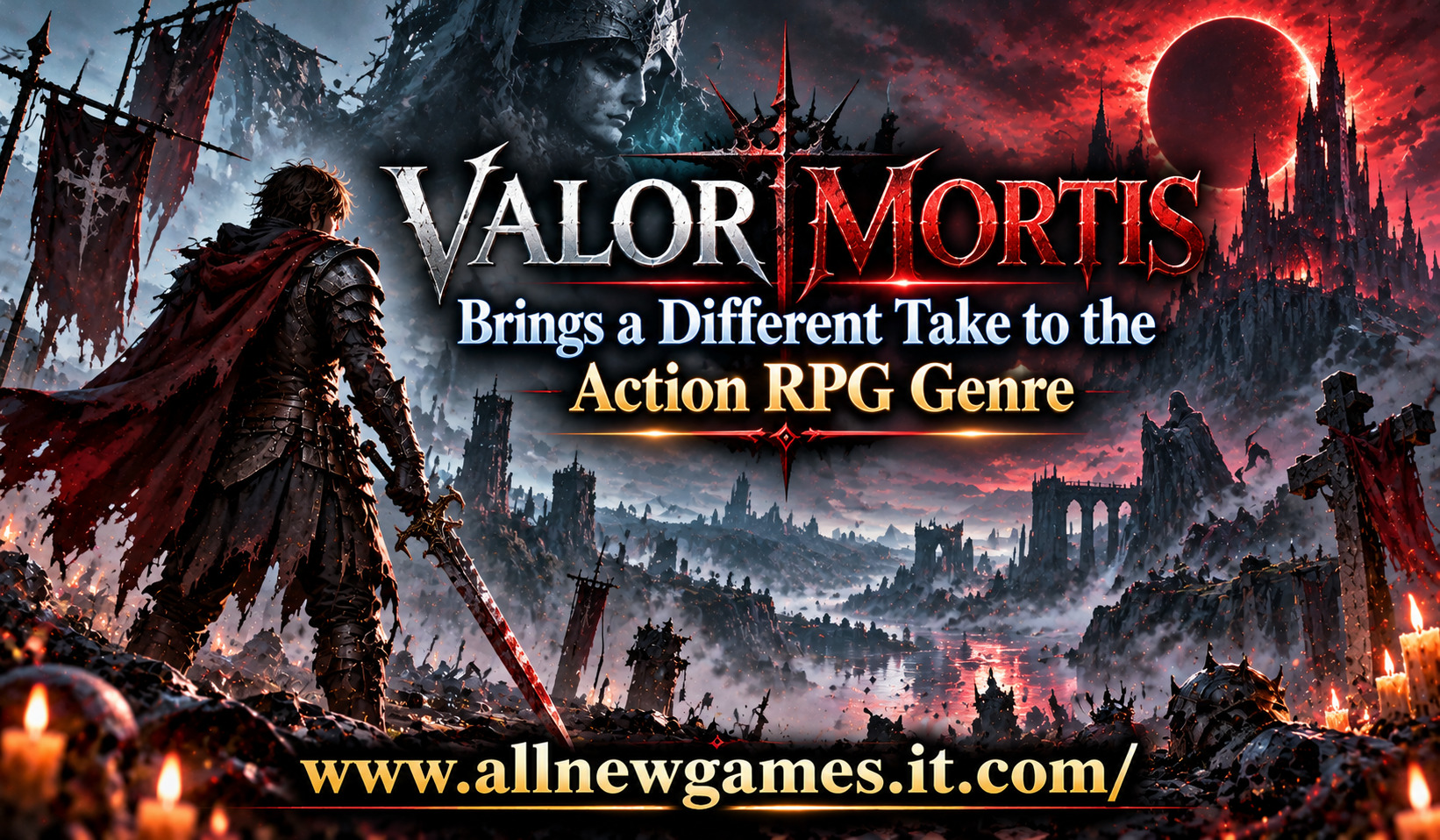
The action role-playing game genre continues to evolve, with developers experimenting with new combat systems, darker settings, and unconventional ways to tell stories. While many action RPGs rely on third-person battles and familiar fantasy worlds, Valor Mortis is taking a different approach. Developed by One More Level, the studio behind Ghostrunner, this upcoming game combines first-person combat, Soulslike difficulty, supernatural abilities, and an alternate-history version of Napoleonic Europe.
Scheduled to launch on October 13, 2026, for PC, PlayStation 5, and Xbox Series X|S, Valor Mortis places players in the role of a fallen soldier who returns from death to face a world transformed by a mysterious plague. Rather than presenting a conventional historical adventure, the game blends military history with disturbing creatures, supernatural powers, and a conspiracy that threatens humanity. Its unusual perspective and combat design could help it stand apart in a crowded action RPG market.
The central question is whether the developers can make first-person melee combat feel as precise and rewarding as the third-person battles commonly associated with Soulslike games. With its distinctive setting and the studio’s experience creating fast-paced action, Valor Mortis is shaping up to offer a different kind of challenge for players.
A Dark Fantasy World Inspired by the Napoleonic Era
One of the most distinctive aspects of Valor Mortis is its setting. The game takes place in an alternate version of Europe during the era of Napoleon Bonaparte. Instead of focusing on historical battles alone, it imagines a continent devastated by a mysterious plague that transforms soldiers and civilians into horrifying enemies.
Players control William Dowsett, a former soldier of Napoleon’s Grande Armée who is brought back from the dead. His resurrection comes with a dangerous consequence: the same corrupting force affecting the world now flows through his body. This creates an unusual relationship between the protagonist and the threat he must confront. William is not simply an ordinary soldier fighting monsters; he is also connected to the supernatural force responsible for the catastrophe.
The story introduces a world where familiar historical imagery exists alongside disturbing fantasy elements. Military uniforms, old European architecture, ruined streets, and abandoned battlefields establish the Napoleonic atmosphere, while grotesque enemies and supernatural events push the setting into horror territory.
This combination gives the game a different identity from fantasy RPGs built around castles, dragons, and magical kingdoms. Its world is rooted in a recognisable historical period, but the developers use that foundation to create an unsettling alternate reality.
Napoleon himself also plays a role in the mystery surrounding William’s resurrection. The story explores the consequences of the emperor’s ambitions and the disturbing events connected to his campaign. As William encounters other survivors and investigates the plague, players can expect the historical conflict to become increasingly entangled with supernatural questions, Players interested in another unique RPG adventure can also read Dragon Quest Monsters: The Withered World Gameplay Expectations, which explores monster recruitment, strategic battles, and fantasy world exploration.
First-Person Soulslike Combat Changes the Experience
The most important difference between Valor Mortis and many other action RPGs is its first-person perspective. Soulslike games generally use third-person cameras, allowing players to observe enemy movements, monitor their own character, and judge distances during difficult encounters.
A first-person view changes those familiar advantages. Enemies occupy more of the player’s immediate field of vision, while attacks and defensive movements must be judged from a closer perspective. Players may need to pay more attention to sound, movement patterns, weapon animations, and the timing of incoming attacks.
According to the game’s official description, combat revolves around parries, dodges, dashes, finishers, and a selection of weapons. These systems encourage players to study their opponents rather than simply attack continuously. Poorly timed strikes or defensive actions can leave William exposed, particularly when facing stronger enemies.
The challenge is not necessarily to make every encounter fast. Instead, the game must balance quick reactions with careful decision-making. A successful parry could create an opportunity for a counterattack, while a poorly judged dodge might place the player directly in the path of another strike.
The first-person camera also creates opportunities for more immediate and intense encounters. Large enemies can appear threatening at close range, and the surrounding environment may feel more immersive when players explore ruined streets or fight through narrow passages.
However, this perspective presents a genuine design challenge. Players need clear visual information to understand the reach of enemy weapons and the timing of attacks. If animations are difficult to read, demanding combat can become frustrating rather than satisfying. The developers have acknowledged the challenges of adapting precision melee combat to a first-person viewpoint and have used player feedback to refine the experience.
Weapons and Supernatural Abilities Offer Different Combat Options
Although Valor Mortis uses a first-person camera, it is not designed as a conventional shooter. Melee weapons remain central to its combat, with swords such as the cutlass and rapier providing different ways to approach encounters. Firearms and supernatural powers add further options, giving players more than one method of dealing with dangerous opponents.
The combination of swords and guns is particularly fitting for the game’s historical setting. Players can engage enemies in close combat while using firearms when the situation calls for a different approach. However, success will depend on understanding when to attack, defend, reposition, or use a limited opportunity to deal extra damage.
The supernatural abilities are equally important. William’s connection to the plague gives him access to powers that go beyond the abilities of an ordinary soldier. These powers can enhance attacks and expand the player’s tactical choices as the adventure progresses.
Weapon development and character progression are also expected to influence how players approach combat. The official gameplay overview highlights the ability to upgrade swords, firearms, and magical abilities. This gives players room to develop their preferred fighting style instead of relying on a single tactic throughout the entire campaign.
The key combat elements include:
- Melee weapons: Swords support close-range encounters that reward timing and positioning.
- Firearms: Pistols and other period-inspired weapons provide additional ways to engage enemies.
- Parries and dodges: Defensive timing creates opportunities to avoid damage and counterattack.
- Supernatural powers: Plague-related abilities expand William’s offensive options and progression.
These systems could help combat remain varied across a longer adventure. Their effectiveness will depend on how well they work together, especially when the game introduces enemies that require different strategies.
Exploration Goes Beyond Fighting Enemies
Combat may be the main attraction, but exploration is another important part of Valor Mortis. The game takes players through historically inspired environments filled with ruined settlements, dangerous pathways, hidden areas, and locations connected to the wider mystery.
Rather than moving from one isolated arena to another, players are encouraged to investigate their surroundings. Shortcuts can make navigation more manageable, while hidden discoveries and sidequests provide reasons to look beyond the main route.
This approach fits the Soulslike design philosophy, where understanding the layout of an environment can be as valuable as mastering combat. A passage discovered during exploration may offer an alternative route, while a hidden encounter could reveal additional details about the world.
The Napoleonic setting also creates opportunities for environmental storytelling. Abandoned military positions, damaged buildings, and evidence of the plague can communicate the scale of the disaster without relying entirely on dialogue. Players may gradually piece together what happened by examining the places they visit and speaking with survivors.
Movement is another area where the developers’ previous experience could influence the design. One More Level became widely associated with fast-paced first-person action through the Ghostrunner series. Although Valor Mortis places greater emphasis on deliberate combat, that background gives the studio experience with movement, spatial awareness, and designing environments around a first-person viewpoint.
The challenge is finding the right balance. Excessive speed could undermine the careful pacing expected from a Soulslike game, while overly restrictive movement might make exploration feel slow. If the developers combine responsive traversal with meaningful environmental design, exploration could become one of the game’s strongest features.
A Story Built Around Resurrection, War, and Corruption
William’s resurrection gives Valor Mortis a personal angle within its larger historical disaster. He begins as a soldier who has already experienced death, but his return raises questions about what he has become and why he has been given another chance.
The plague is more than a source of enemies. It is connected to William’s abilities and the broader conspiracy unfolding across Europe. This creates a tension between power and corruption: the force that helps him survive may also represent the danger threatening his identity.
The narrative introduces other characters who have their own relationships with the conflict. Among them is the Shrike, a resistance leader fighting against the empire’s influence. Her presence suggests that the story will involve more than William’s personal survival. Political resistance, military loyalty, and the consequences of Napoleon’s campaign all contribute to the wider setting.
Napoleon’s role adds another layer of uncertainty. The emperor is associated with the voice guiding William, but the true nature of this relationship is part of the mystery. Players will have to discover whether the guidance they receive is trustworthy and how it relates to the plague.
This combination of personal uncertainty and a wider conspiracy could give the game a compelling narrative foundation. The strongest outcome would be a story in which discoveries about the world also change how players understand William’s abilities and motivations.
How Valor Mortis Differs From Traditional Action RPGs
The game enters a genre already filled with demanding combat, character progression, and elaborate fictional worlds. Its main opportunity is not to replace those familiar elements but to present them through a different combination of perspective, setting, and mechanics.
| Feature | Traditional action RPG approach | Valor Mortis |
| Camera perspective | Often third-person | First-person |
| Setting | Frequently high fantasy or fictional worlds | Alternate-history Napoleonic Europe |
| Combat focus | Melee, magic, and varied ability systems | Precision melee, firearms, and supernatural powers |
| Atmosphere | Varies by game | Dark historical fantasy with horror elements |
| Exploration | Open worlds, regions, or connected areas | Historically inspired locations, secrets, shortcuts, and sidequests |
| Character progression | Equipment, skills, and upgrades | Weapon development and supernatural abilities |
The table highlights the game’s intended identity rather than suggesting that every RPG follows the same formula. Many existing games experiment with first-person combat or historical fantasy, but Valor Mortis combines these ideas with a Soulslike structure and a plague-ravaged Napoleonic world.
Its success will depend on execution. A distinctive setting can attract attention, but responsive controls, readable enemy attacks, and satisfying progression are essential for keeping players engaged.
Can Valor Mortis Appeal to Soulslike Fans?
Players who enjoy difficult action games may be particularly interested in the title’s approach to combat. The focus on parrying, dodging, learning enemy patterns, and improving through repeated attempts should feel familiar to fans of the Soulslike genre.
The first-person perspective, however, may require some adjustment. Players accustomed to watching their character from behind will need to learn how to read enemy movements from a different angle. That difference could become the game’s defining strength if the controls and visual feedback consistently communicate what is happening during combat.
The game may also attract players who enjoy dark fantasy but want a setting beyond traditional medieval kingdoms. Its blend of historical architecture, military equipment, supernatural threats, and horror gives it a distinct visual identity.
At the same time, the difficult balance will be important. A challenging game can be rewarding when failure teaches players something useful, but encounters may become discouraging if enemy attacks feel unclear or progression does not provide enough meaningful improvement. A preview published by Game Informer in September 2026 raised concerns about uneven difficulty in the version it played, making balance an important point to watch at launch.
Release Date and Platforms
Valor Mortis is scheduled to launch on October 13, 2026, for PC through Steam, PlayStation 5, and Xbox Series X|S. The developer and publisher have also announced a price of $39.99 in the United States, with regional prices varying by market. The game’s official announcements describe a story expected to last around 20 hours, although individual playtime can differ depending on exploration and combat difficulty.
With its release approaching, players will soon be able to judge how successfully the finished game brings its different systems together. Its first-person Soulslike combat is a major selling point, but the atmosphere, narrative, exploration, and progression will all contribute to the final experience.
Final Thoughts
Valor Mortis is taking a notable risk by combining first-person melee combat with Soulslike difficulty and an alternate-history interpretation of the Napoleonic era. Its supernatural storyline, plague-infected enemies, weapon upgrades, and exploration systems give it a clear identity in a competitive genre.
The most important test will be whether the combat feels fair, responsive, and satisfying over the course of the adventure. If the developers deliver clear enemy animations and meaningful progression, the unusual perspective could become a genuine advantage rather than an obstacle.
For now, Valor Mortis stands out as an action RPG worth watching for players who want a darker setting and a different approach to familiar genre mechanics. Its launch on October 13 will provide the clearest opportunity to see whether its ambitious ideas translate into a consistently rewarding experience.
Frequently Asked Questions
1. What is Valor Mortis?
Valor Mortis is a first-person action Soulslike game developed by One More Level, the studio known for Ghostrunner. It combines challenging combat, supernatural abilities, exploration, and a dark alternate-history setting inspired by the Napoleonic era.
2. When does Valor Mortis release?
The game is scheduled to launch on October 13, 2026.
3. Which platforms will support Valor Mortis?
The announced platforms are PC through Steam, PlayStation 5, and Xbox Series X|S.
4. Who is the main character in Valor Mortis?
Players control William Dowsett, a former soldier of Napoleon’s Grande Armée who returns from death with supernatural powers connected to a mysterious plague.
5. Is Valor Mortis a first-person shooter?
Not in the traditional sense. Although the game includes firearms, its combat is built around first-person melee encounters, parries, dodges, swordplay, and supernatural abilities rather than conventional shooting alone.