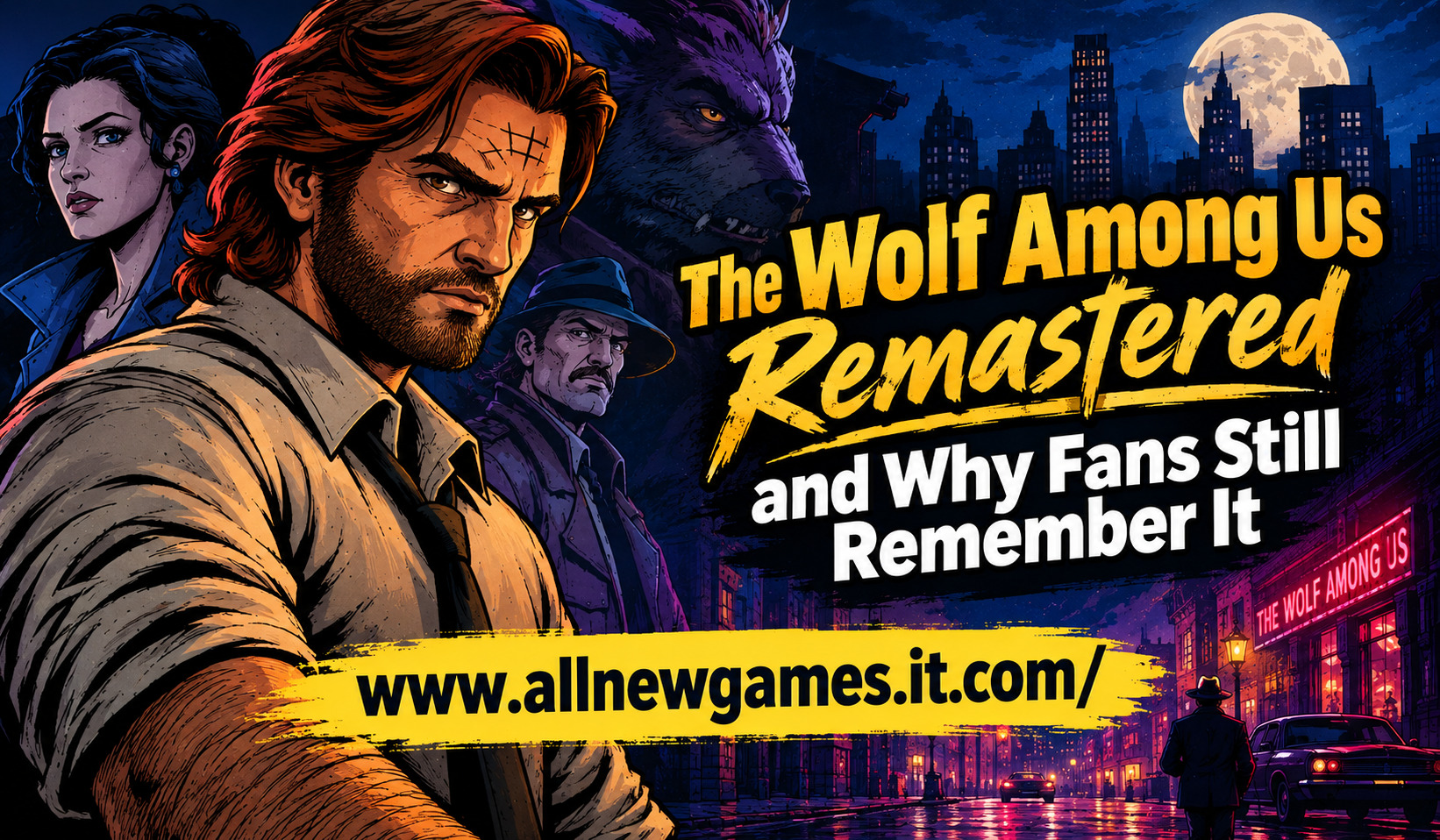
Few story-driven games have managed to build such a lasting connection with players as The Wolf Among Us. Developed by Telltale Games, this episodic adventure became known for its dark atmosphere, memorable characters, difficult decisions, and mystery-filled storytelling. Even years after its original release, the game continues to attract attention from fans who appreciate narrative-driven adventures and crime dramas. Discussions about a possible remastered edition also reflect the continued interest in bringing this distinctive experience to a newer generation of players.
However, the appeal of The Wolf Among Us goes beyond improved graphics or modern hardware. Its lasting reputation comes from the way it combines fairy-tale characters with a gritty detective story, allowing players to influence conversations and relationships while investigating a dangerous mystery. For many fans, the game represents a period when episodic storytelling became one of the most exciting approaches to interactive entertainment.
What Makes The Wolf Among Us Special?
Originally released in episodes beginning in 2013, The Wolf Among Us is a prequel to the comic-book series Fables, created by Bill Willingham. The story takes place in Fabletown, a hidden community in New York City where characters from fairy tales and folklore live among ordinary people.
Players take control of Bigby Wolf, the sheriff of this unusual community. Better known as the Big Bad Wolf, he attempts to maintain order among residents who have escaped their traditional fairy-tale worlds. His job becomes increasingly complicated when a disturbing game leads him into a larger mystery involving secrets, corruption, and vulnerable members of the community.
This unusual setting gives the game its identity. Instead of presenting fairy-tale characters through cheerful adventures, it reimagines them as people dealing with poverty, prejudice, violence, and difficult personal choices. Familiar names become part of a world that feels closer to a modern detective thriller than a traditional fantasy story.
The combination of recognizable folklore and mature crime storytelling helped the game stand apart from other adventure titles. It created a setting that felt both familiar and unexpected, giving players a reason to continue investigating every new clue.
Why Fans Continue to Remember Bigby Wolf
Bigby Wolf is one of the strongest reasons the game remains memorable. He is not presented as a simple hero who always makes the right decision. Instead, he struggles with his reputation, his violent past, and the responsibility of protecting a community that does not always trust him.
Players can shape Bigby’s personality through dialogue choices and actions. He may respond to a situation with patience, intimidation, sarcasm, or aggression. These choices influence how other characters perceive him, making conversations feel more personal than in a conventional linear adventure.
His internal conflict also gives the story emotional depth. Bigby wants to demonstrate that he can be more than the monster people expect him to be, but the world around him constantly challenges that goal. This tension between reputation and personal identity remains relevant to players who enjoy complex protagonists.
Other characters contribute to the game’s appeal as well. Snow White serves as an important figure in Fabletown’s administration, while characters such as Ichabod Crane, Bloody Mary, and the Woodsman add different perspectives to the investigation. Their relationships with Bigby create uncertainty, ensuring that players rarely know whom they can fully trust.
The Detective Story That Keeps Players Engaged
The central murder investigation is another major reason for the game’s lasting popularity. Rather than relying on constant action, the story develops through interviews, discoveries, confrontations, and unexpected revelations.
Players investigate locations, examine evidence, and question characters who may be hiding important information. The mystery gradually expands, revealing how individual problems connect to larger issues within Fabletown.
The atmosphere plays a significant role in this process. Dark streets, rain-soaked surroundings, dimly lit interiors, and a moody soundtrack establish a sense of danger. Even ordinary conversations can feel tense because the player never knows when a character might reveal something important or react aggressively.
The game also understands the importance of pacing. Each episode introduces new information while leaving questions that encourage players to continue. Cliffhangers became a defining feature of its original episodic format, making the experience feel similar to following a television crime drama.
Player Choices and Their Emotional Impact
Telltale’s dialogue-based approach is central to the experience. Players regularly encounter decisions that affect how Bigby handles conflicts and how other characters respond to him. Some choices require an immediate reaction, while others ask players to decide what kind of sheriff they want Bigby to become.
The most interesting decisions are not always about choosing between a clearly good and bad outcome. Sometimes, protecting one person may damage another relationship. A threatening response might produce useful information but increase someone’s fear of Bigby. A calmer approach may preserve trust while allowing a dangerous situation to continue.
Important features of the game’s choice system include:
- Dialogue options that influence character relationships.
- Timed decisions that create pressure during conversations.
- Investigative choices that determine how Bigby approaches certain situations.
- Consequences that can change the tone of later interactions.
Although the game follows a largely established main storyline, these choices give individual playthroughs a personal quality. Players often remember not only the mystery itself but also the decisions they made while trying to solve it.
Could a Remastered Edition Introduce the Game to New Players?
Interest in a remastered version is understandable because the original game has a distinctive visual style that could benefit from modern technical improvements. Its comic-book-inspired graphics remain an important part of its identity, but higher display resolutions, smoother performance, improved lighting, and updated platform support could make the experience more accessible.
A carefully produced remaster would not need to transform the game’s entire presentation. In fact, changing too much could weaken the visual character that made it recognizable. The strongest approach would preserve its original artistic direction while improving technical consistency and convenience on contemporary systems.
Potential improvements fans might welcome include:
- Higher-resolution textures and sharper character details.
- More consistent performance on current gaming hardware.
- Improved compatibility with modern displays and operating systems.
- Accessibility options, including clearer subtitles and customizable presentation settings.
These are possibilities rather than confirmed features of a specific remaster. A remastered edition should not be treated as officially announced unless supported by an announcement from the publisher or developer.
For returning players, an updated release could offer an opportunity to revisit a familiar story. For newcomers, it could provide a more convenient way to discover a game that helped establish Telltale’s reputation for interactive drama.
The Importance of the Game’s Visual Style and Music
One of the most recognizable elements of The Wolf Among Us is its comic-book-inspired presentation. Strong outlines, dramatic shadows, bold colors, and carefully composed scenes make the world resemble an illustrated crime comic brought to life.
This artistic direction also supports the narrative. Fabletown rarely looks welcoming, and the contrast between its colorful folklore origins and its grim urban reality strengthens the story’s central themes. Bigby himself is often framed as a threatening presence, even when he is attempting to help someone.
The soundtrack complements this visual identity with atmospheric music that builds tension without overwhelming dialogue. Quiet scenes can feel uncomfortable because of the restrained audio, while confrontations gain intensity through changes in sound and pacing.
A successful remaster would need to preserve these elements rather than replace them with a generic modern aesthetic. The original presentation is not merely a technical limitation of its era; it is an essential part of the game’s storytelling.
Why The Wolf Among Us Still Matters in Gaming
The game’s reputation reflects a broader interest in interactive stories that allow players to participate in character development. Its emphasis on dialogue, moral uncertainty, and narrative consequences offered a different experience from games built primarily around combat or exploration.
It also demonstrated how familiar fictional characters could be reinterpreted for mature audiences without losing their recognizable identities. By combining folklore with detective fiction, the game created a world that encouraged players to question the stories they thought they already knew.
Its influence can also be understood through the continuing demand for narrative adventures. Players who enjoy character-focused games often look for meaningful conversations, memorable performances, and stories that reward attention. The Wolf Among Us continues to fit that preference.
The long wait for a follow-up has also contributed to the community’s continued interest. Fans remain invested in Bigby and the world of Fabletown because the original story established characters and conflicts that are easy to revisit in discussion, fan art, and theories.
Conclusion
The Wolf Among Us remains memorable because it offers more than a murder mystery set in a fantasy world. Its complicated protagonist, distinctive visual style, atmospheric soundtrack, and decision-driven conversations combine to create an experience that feels personal and emotionally engaging.
A remastered edition could help the game reach new audiences if it preserves the qualities that made the original special while improving its technical presentation. However, the lasting appeal of the game does not depend entirely on a new release. Its storytelling and characters continue to provide reasons for players to return.
For fans of detective adventures and interactive drama, The Wolf Among Us remains an important example of how video games can turn familiar stories into something darker, more complicated, and unexpectedly human.
Frequently Asked Questions (FAQs)
1. What is The Wolf Among Us about?
It is a narrative adventure game in which players control Bigby Wolf, the sheriff of a hidden community of fairy-tale characters living in New York City. He investigates a murder that reveals deeper problems within the community.
2. When was The Wolf Among Us originally released?
The first episode was released in October 2013, with subsequent episodes released through 2014.
3. Is The Wolf Among Us based on a comic book?
Yes. It serves as a prequel to the Fables comic-book series created by Bill Willingham.
4. What makes the game different from other adventure games?
Its distinctive comic-book visuals, mature detective story, complex characters, dialogue choices, and morally difficult decisions make it stand out.
5. Has The Wolf Among Us Remastered been officially announced?
A remastered edition should not be assumed to exist without an official announcement. Readers should check Telltale Games’ official channels for verified release information.