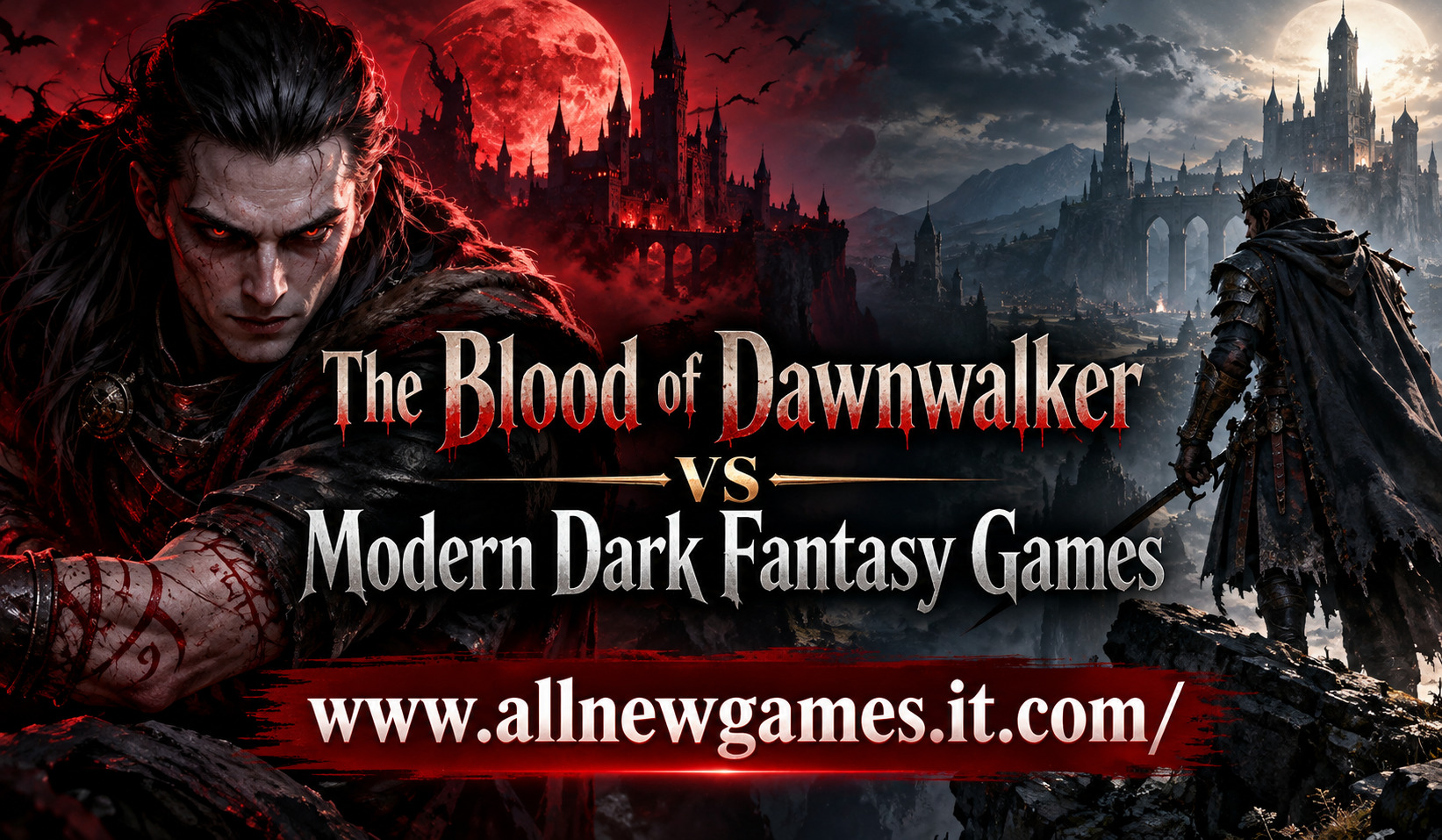
Dark fantasy games continue to attract players with dangerous worlds, morally complicated characters, supernatural enemies, and stories where every decision can carry a price. From massive open-world adventures to challenging action RPGs, the genre offers different ways to explore fear, power, survival, and human ambition. However, The Blood of Dawnwalker takes a distinctive approach by combining a medieval setting, vampire mythology, and a time-sensitive story that forces players to decide what matters most.
Developed by Rebel Wolves and published by Bandai Namco Entertainment, The Blood of Dawnwalker launched on September 3, 2026, for PC, PlayStation 5, and Xbox Series X|S. The game is set in 14th-century Europe and follows Coen, a young man who becomes a vampire while attempting to save his family. Its central premise combines supernatural abilities with the difficult choices of a desperate human struggle.
Unlike many role-playing horror games that encourage players to explore every location at their own pace, this adventure introduces a 30-day-and-night deadline. That decision gives the game a different identity within a genre already filled with ambitious open-world experiences.
What Is The Blood of Dawnwalker About?
The story takes place in a fictional region of the Carpathian Mountains during a period inspired by medieval European history. The Black Death has devastated communities, leaving ordinary people vulnerable to disease, poverty, and powerful figures who exploit their desperation.
Coen’s life changes when his family becomes caught in a conflict involving Brencis, a powerful vampire lord. After supernatural events transform Coen into a Dawnwalker, he gains abilities that separate him from ordinary humans. However, his transformation also introduces a struggle between his human identity and his growing vampiric nature.
His primary goal is to save his family, but the road toward that objective is far from straightforward. Players must decide which characters deserve help, which threats should be confronted, and how much time they can afford to spend exploring the world.
This combination of personal stakes and supernatural conflict makes the game different from fantasy adventures built around defeating a distant evil or collecting increasingly powerful equipment. Coen’s story is about protecting the people he loves while discovering what he is becoming.
How It Compares With Modern Dark Fantasy RPGs
Several contemporary role-playing games have established different approaches to dark fantasy. The Witcher 3: Wild Hunt combines monster hunting with political conflict and character-driven quests. Elden Ring emphasizes environmental storytelling, mysterious mythology, exploration, and demanding combat. Dragon’s Dogma 2 focuses on a dangerous fantasy world, party-based combat, and encounters that can develop unpredictably.
The Blood of Dawnwalker shares elements with these games, but its time-sensitive structure and vampire-focused mechanics create a different experience.
The Witcher 3: Wild Hunt
The connection between The Blood of Dawnwalker and The Witcher 3 is difficult to ignore. Rebel Wolves was founded by industry veterans, including developers who previously worked on CD Projekt Red’s role-playing games. Both titles emphasize morally complex quests, dialogue, consequential decisions, and a world shaped by human weakness as much as supernatural danger.
However, their protagonists approach the world from different positions. Geralt is an experienced monster hunter who travels through a politically divided setting, while Coen is a young man forced to adapt to a supernatural transformation and an urgent family crisis.
The most significant difference is the time limit. The Witcher 3 generally allows players considerable freedom to complete side quests and explore at their preferred pace. The Blood of Dawnwalker makes time part of the decision-making process, meaning that optional activities can compete directly with the protagonist’s main objective.
Elden Ring
FromSoftware’s Elden Ring builds its dark fantasy identity around mysterious lore, difficult battles, unusual creatures, and the freedom to explore a vast landscape. Much of its storytelling comes through environmental details, item descriptions, and discoveries that players interpret themselves.
The Blood of Dawnwalker takes a more character-focused approach. Its central family conflict provides a clear emotional reason for Coen’s journey, while conversations and quest decisions help communicate the consequences of his actions.
Combat is also approached differently. Instead of concentrating primarily on challenging encounters and player mastery, The Blood of Dawnwalker connects its action systems with Coen’s changing identity. His human and vampire abilities offer different approaches to exploration and conflict.
Dragon’s Dogma 2
Dragon’s Dogma 2 is another useful comparison because it emphasizes exploration, emergent encounters, and the dangers of travelling through a fantasy world. Its large environments encourage players to prepare for journeys and respond to unexpected threats.
The difference lies in the narrative pressure. In The Blood of Dawnwalker, the passage of time is directly connected to the central story. Players cannot treat every opportunity as equally important because some activities advance the clock and bring the deadline closer.
This approach may appeal to players who want their decisions to involve more than equipment upgrades or combat difficulty. It also creates a challenge for the developers: the game must make its time pressure meaningful without making exploration feel like a mistake.
The 30-Day Deadline Changes the Experience
One of the game’s defining mechanics is its limited window for saving Coen’s family. Major activities, certain conversations, and other actions can advance time, forcing players to consider whether an optional quest is worth pursuing.
This does not simply mean that players must rush through the main storyline. Instead, the deadline creates a system of competing priorities. Helping a villager might uncover valuable information or establish a useful alliance, but the time spent doing so could affect another opportunity.
The developers have explained that players can reach the main antagonist without completing every optional activity. The consequences of running out of time also do not necessarily mean an immediate game over. Instead, the narrative continues and reflects the decisions that brought Coen to that point.
The system encourages a different mindset from traditional open-world RPGs. Rather than asking, “What can I complete before moving forward?”, players must consider, “What is worth sacrificing to accomplish my main objective?”
Important elements of this approach include:
- A limited period in which to pursue the main objective.
- Optional quests that compete for the player’s time.
- Decisions that can change character relationships and story outcomes.
- Consequences that may remain even when a player cannot save everyone.
This design gives ordinary activities greater narrative importance. A small decision can become meaningful when players understand that they cannot do everything.
Day and Night: Two Sides of Coen
Another feature that distinguishes The Blood of Dawnwalker is its separation between human and vampire gameplay. Coen’s abilities and opportunities change depending on the time of day, making his transformation central to both combat and exploration.
During daylight, he can rely on abilities associated with witchcraft and his remaining human characteristics. At night, vampiric powers offer alternative ways to approach encounters and navigate the environment. Sword fighting also plays an important role in his combat options.
The dual structure creates opportunities for players to experiment with different strategies. A situation that appears difficult during the day may offer another approach at night, while supernatural strength can come with moral or practical costs.
This contrasts with many dark fantasy RPGs, where supernatural powers are primarily tools for defeating increasingly powerful enemies. Here, the transformation also raises questions about identity, restraint, and the danger of losing control.
Coen’s vampiric hunger adds another layer to the experience. Managing that hunger can influence encounters and conversations, making his supernatural condition a narrative concern rather than simply a visual feature.
Atmosphere, World Design, and Storytelling
Dark fantasy depends on more than monsters and violent encounters. Its atmosphere often comes from the feeling that ordinary life has become dangerous and that institutions meant to provide protection may be corrupt.
The medieval setting of The Blood of Dawnwalker supports this idea through its combination of plague-era hardship, isolated settlements, supernatural threats, and oppressive vampire rule. The landscape is not merely a backdrop for combat; it reflects the struggles of people living under extraordinary pressure.
The game is also built using Unreal Engine 5, supporting its detailed environments and modern visual presentation. Nevertheless, graphical technology alone cannot establish a distinctive identity. Its strongest opportunity lies in connecting the world, characters, and gameplay systems to the same central conflict.
Compared with Elden Ring, which often leaves players to interpret its world independently, The Blood of Dawnwalker places a more direct personal story at the centre. Compared with The Witcher 3, it introduces a more explicit deadline that influences how players interact with the world.
Comparison Table: The Blood of Dawnwalker vs Other RPGs
| Feature | The Blood of Dawnwalker | The Witcher 3 | Elden Ring |
| Main focus | Family, vampirism, and time pressure | Monster hunting and political conflict | Exploration and mysterious lore |
| World design | Open-world dark fantasy | Open-world fantasy | Open-world action RPG |
| Combat identity | Sword fighting and supernatural abilities | Swordplay, signs, and alchemy | Challenging action combat |
| Narrative approach | Character-driven and time-sensitive | Quest-driven and choice-based | Primarily environmental and indirect |
| Exploration | Balanced against an ongoing deadline | Generally flexible | Highly exploration-focused |
These comparisons describe each game’s broad design priorities rather than suggesting that any one title is universally better.
Strengths and Challenges for the Game
The most promising aspect of The Blood of Dawnwalker is the way it connects its major mechanics to the same narrative idea. The deadline creates urgency, vampirism changes how Coen interacts with the world, and family relationships give his decisions emotional weight.
However, the same systems could present challenges. Players who enjoy exploring every corner of an open world may find the passage of time restrictive. Others may want more flexibility to experiment with side quests without worrying about missing important story opportunities.
Balancing these preferences is particularly important for a role-playing game that promises meaningful consequences. The time limit must create interesting choices rather than simply punish curiosity, while the human-versus-vampire mechanics need enough variety to remain engaging throughout the adventure.
The game’s long-term reputation will depend on how successfully these systems work together, not simply on its similarities to established fantasy RPGs.
Conclusion
The Blood of Dawnwalker enters the modern dark fantasy genre with a clear identity. It combines medieval European influences, vampire mythology, character-focused storytelling, and a deadline that turns time into a resource players must manage carefully.
Its connections to The Witcher 3, Elden Ring, and Dragon’s Dogma 2 make it part of a familiar conversation about ambitious fantasy RPGs. Yet its focus on Coen’s family, his transformation, and the consequences of choosing one responsibility over another gives it a distinct direction.
For players who enjoy narrative choices alongside exploration and combat, the game offers an alternative to adventures that allow nearly unlimited time to complete everything. Its central question is not simply whether Coen can become powerful enough to defeat his enemies, but what he is willing to give up to save the people he loves.
Ultimately, the game’s strongest feature is its attempt to make time, morality, and supernatural power part of one connected experience. That combination gives The Blood of Dawnwalker a meaningful place among modern dark fantasy RPGs.
Frequently Asked Questions (FAQs)
1. What is The Blood of Dawnwalker?
It is an open-world dark fantasy action RPG developed by Rebel Wolves and published by Bandai Namco Entertainment. Players control Coen, a young man who becomes a vampire while trying to save his family.
2. When was The Blood of Dawnwalker released?
The game launched on September 3, 2026, for PC, PlayStation 5, and Xbox Series X|S.
3. How is The Blood of Dawnwalker different from The Witcher 3?
Both games emphasize narrative choices and morally complex characters. However, The Blood of Dawnwalker features a central time limit, vampire-focused gameplay, and a personal mission to save Coen’s family.
4. Why is the 30-day time limit important?
It forces players to prioritize quests and decide which characters or opportunities deserve their attention. Some actions advance time, so completing everything may not be possible within a single playthrough.
5. Can Coen use different abilities during the day and at night?
Yes. The game distinguishes between Coen’s human and vampiric sides, providing different abilities and gameplay opportunities depending on the time of day.