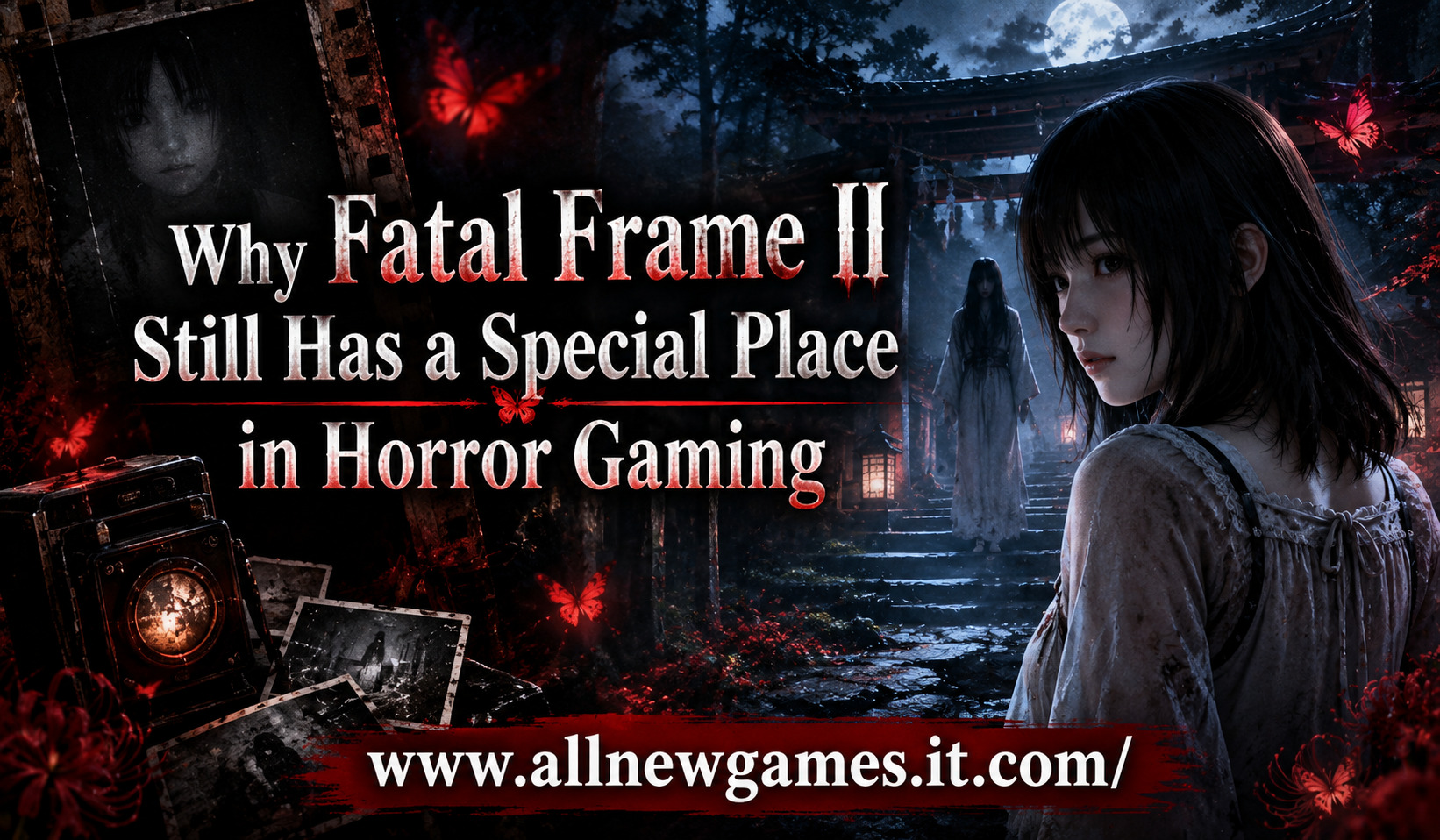
Horror gaming has evolved dramatically over the past two decades. Modern titles feature realistic graphics, cinematic cutscenes, complex combat systems, and terrifying creatures designed to keep players on edge. Yet, despite these technological advances, some classic horror games continue to leave a lasting impression. Fatal Frame II: Crimson Butterfly remains one of the strongest examples of how atmosphere, emotional storytelling, and an original gameplay concept can make a horror experience unforgettable.
Originally released in 2003, the game introduced players to the frightening journey of twin sisters Mio and Mayu Amakura. Their exploration of a mysterious, abandoned Japanese village gradually reveals disturbing supernatural events, tragic rituals, and secrets connected to the sisters themselves. Instead of relying on conventional weapons, the game asks players to use a special camera to confront hostile spirits.
More than two decades later, the game continues to attract attention from horror enthusiasts. Its enduring reputation has also gained renewed visibility through the full remake released on March 12, 2026. The remake updates the original experience for modern platforms while preserving its recognizable identity.
The continued interest in Fatal Frame II raises an important question: what makes this particular horror game so memorable when the genre now offers so many different ways to frighten players?
A Different Approach to Survival Horror
When Fatal Frame II first appeared, survival horror was already an established genre. Players were familiar with games involving limited ammunition, dangerous enemies, puzzle-solving, and isolated environments. However, the Fatal Frame series introduced a distinctive approach by making photography the central method of fighting supernatural enemies.
The Camera Obscura is not simply another weapon. It changes the way players interact with danger. Instead of shooting a creature from a safe distance, players must point the camera toward a ghost, frame the image, and choose the right moment to take a photograph. Effective attacks often require players to allow a spirit to approach, creating an uncomfortable balance between risk and reward.
This mechanic turns the act of looking into a source of fear. Players cannot always avoid seeing the threat in front of them because facing it is necessary for survival. Every encounter becomes a test of timing, patience, and courage.
The system also gives the game a recognizable identity. Many horror titles depend on firearms, melee weapons, or stealth mechanics, but Fatal Frame II builds its combat around an ordinary object transformed into something supernatural. The idea remains memorable because it is closely connected to the game’s atmosphere and storytelling.
Even today, this design feels different from many mainstream horror experiences. It demonstrates that a game does not need a complicated combat system to create tension. Sometimes, a simple mechanic becomes more frightening when the player must use it under pressure.
The Haunted Village Is More Than a Setting
One of the biggest reasons Fatal Frame II remains memorable is its location. The abandoned village of Minakami is presented as a place filled with forgotten histories, unsettling traditions, and supernatural suffering. Its narrow paths, wooden houses, dim interiors, and isolated buildings create an environment where danger seems to exist even when no enemy is visible.
The village’s atmosphere depends heavily on what players cannot see. A dark doorway may contain nothing, or it may lead to an unexpected encounter. A quiet room can feel more threatening than a battle because the player has no clear indication of what might happen next.
This use of uncertainty is an important part of Japanese horror. Rather than revealing every threat immediately, the game encourages players to imagine what might be hiding nearby. The result is a persistent sense of unease that continues during exploration.
Environmental storytelling also gives the setting emotional depth. Objects, photographs, notes, and abandoned rooms suggest that the village once contained ordinary lives before its tragic events. Players gradually piece together the past, turning exploration into an investigation of what went wrong.
The remake builds on this approach with a reconstructed environment, enhanced lighting, and more detailed sound design. However, the original concept remains important: the village must feel like a place with a disturbing history, not simply a collection of locations designed for frightening encounters.
Mio and Mayu Give the Horror an Emotional Core
Supernatural enemies and disturbing locations can create fear, but emotional storytelling is often what makes a horror game stay with players long after the final scene. In Fatal Frame II, the relationship between Mio and Mayu provides that emotional foundation.
The sisters enter Minakami Village together, but their experiences are not identical. Mio is protective of Mayu, while Mayu’s connection to the supernatural draws her deeper into the village’s mystery. Their personalities and vulnerabilities influence the way the story unfolds.
Their relationship creates a powerful reason to keep moving forward. Players are not simply searching for an exit or trying to defeat a final enemy. They are also trying to understand what is happening to two sisters whose bond is tested by increasingly disturbing circumstances.
This emotional dimension gives the supernatural events greater meaning. Fear becomes connected to responsibility, separation, guilt, and the possibility of losing someone important. The player is encouraged to care about the characters rather than treating them as interchangeable horror protagonists.
The sisters’ relationship also makes the title’s central imagery more meaningful. The crimson butterfly becomes associated with the village’s mystery and the journey that draws the characters into danger.
For many horror games, memorable monsters or shocking scenes provide the strongest memories. Fatal Frame II offers something different: its emotional story helps make the frightening moments feel personal.
Why the Game’s Horror Feels So Personal
A major strength of Fatal Frame II is its ability to create fear without constantly relying on sudden attacks. Unexpected ghost appearances certainly contribute to the experience, but the game also builds tension through exploration, sound, silence, and the player’s limited knowledge.
A distant noise may suggest that something is moving through the next room. A familiar location can feel different when players return to it later. A ghost may appear only briefly, leaving players uncertain about whether they actually saw what they think they saw.
This uncertainty encourages active participation. Players fill the gaps in the experience with their own expectations and imagination. Because they do not always know when something frightening will happen, even routine actions can become uncomfortable.
The Camera Obscura strengthens this effect because players must deliberately look toward supernatural threats. In many games, turning away from a monster is an instinctive response. Here, avoiding the sight of a ghost can make it harder to defend yourself.
The game therefore transforms observation into a source of anxiety. Looking is necessary, but looking can also expose the player to something disturbing.
Several design elements help explain the game’s lasting impact:
- Atmospheric sound: Quiet passages and ambiguous noises encourage players to remain alert.
- Limited certainty: The game rarely allows players to feel completely safe while exploring.
- Direct confrontation: The camera requires players to face many of the threats they would prefer to avoid.
- Emotional stakes: The sisters’ relationship makes the consequences of danger feel personal.
Together, these features create a style of horror that depends on anticipation as much as action.
Japanese Folklore Gives the Story Its Identity
Another reason Fatal Frame II holds a special place in horror gaming is its use of Japanese supernatural themes. The game draws on familiar elements of ghost stories, spiritual rituals, haunted places, and the belief that the past can continue to influence the present.
Rather than presenting every spirit as a simple enemy, the game connects supernatural encounters to the village’s history. The ghosts contribute to a larger mystery involving suffering, tradition, and events that have left lasting consequences. This approach gives the horror a tragic quality that extends beyond the immediate danger of combat.
The cultural setting also distinguishes the game from horror experiences built around familiar Western monsters or industrial environments. Its traditional architecture, isolated village, and ritual imagery create a different kind of atmosphere. The result is a world that feels unfamiliar to many players while remaining grounded in recognisable human emotions.
This combination of cultural identity and psychological tension helped Fatal Frame II develop a reputation among fans of Japanese horror. Its approach demonstrates how folklore can provide a rich foundation for interactive storytelling when it is integrated into the setting, characters, and gameplay.
How the 2026 Remake Introduces the Classic to New Players
The release of Fatal Frame II: Crimson Butterfly Remake on March 12, 2026, has brought the classic adventure back into the spotlight. Developed with modern hardware in mind, the remake updates the graphics, audio, controls, and gameplay while retaining the central concept of confronting ghosts through photography.
The updated presentation allows players to explore Minakami Village with a closer third-person perspective instead of the original’s fixed camera angles. The Camera Obscura also receives additional functions, including focus, zoom, and filter switching, giving players more ways to approach encounters and exploration.
Another notable addition is the ability to hold Mayu’s hand. This mechanic reinforces the emotional connection between the sisters while adding a practical gameplay element. The remake also expands the experience with additional locations and side stories, offering returning fans more material to discover.
These changes reflect a challenge shared by many remakes: modernising an older game without losing what made it distinctive. Controls that once felt restrictive can benefit from improvements, but the experience still needs to preserve vulnerability and tension.
The remake’s importance therefore goes beyond improved visuals. It gives new players an accessible way to understand why the original became so respected, while allowing longtime fans to revisit its world through a different presentation.
Why Its Legacy Continues to Matter
The survival horror genre continues to evolve, but Fatal Frame II demonstrates that memorable design is not necessarily tied to technological power. Its strongest qualities come from the relationship between its gameplay, setting, and story.
The Camera Obscura remains a particularly effective example of a mechanic that supports a game’s central theme. Photography is simultaneously a means of defence, a method of investigation, and a way to confront the supernatural. Few horror games have built their entire identity around such a distinctive idea.
Its influence is also visible in the broader discussion about what makes horror effective. A game can frighten players through uncertainty and vulnerability rather than relying entirely on combat or graphic imagery. By making players responsible for looking directly at their enemies, Fatal Frame II creates a memorable relationship between the player and the source of fear.
The game is not without design limitations, and its pacing or mechanics may not appeal equally to every modern player. Nevertheless, its distinctive identity helps explain why it continues to attract attention more than two decades after its original release.
Ultimately, its legacy rests on the experience it creates rather than on nostalgia alone. The combination of an emotionally driven story, a haunted setting, and camera-based combat remains compelling because these elements reinforce one another.
Conclusion
Fatal Frame II: Crimson Butterfly still has a special place in horror gaming because it approaches fear from a different direction. Instead of giving players conventional weapons and encouraging them to overpower their enemies, it asks them to face supernatural threats through a camera. Its haunted village, Japanese folklore, and emotionally complicated story create an experience that is both frightening and deeply personal.
The 2026 remake provides a new opportunity to experience these qualities with updated technology and gameplay. Although modernisation brings its own challenges, the original’s most important strengths remain relevant: atmosphere, uncertainty, emotional storytelling, and the courage required to look directly at what frightens you.
For longtime fans, the game remains a defining example of Japanese survival horror. For newcomers, it offers a reminder that some of the most memorable horror experiences come not from overwhelming players with action, but from making every shadow and unexplained sound feel significant.
Frequently Asked Questions (FAQs)
1. Why is Fatal Frame II considered a classic horror game?
It combines an original camera-based combat system with Japanese supernatural themes, atmospheric exploration, and an emotional story about twin sisters.
2. When was Fatal Frame II: Crimson Butterfly originally released?
The original game was released in 2003. It later received a full remake that launched on March 12, 2026.
3. What is the Camera Obscura?
The Camera Obscura is a supernatural camera used to photograph and repel hostile spirits. Players must aim carefully and choose the right moment to take photographs during encounters.
4. Who are Mio and Mayu?
Mio and Mayu Amakura are twin sisters who enter the haunted Minakami Village and become involved in its disturbing supernatural history. Their relationship is central to the story.
5. What makes Fatal Frame II different from other survival horror games?
Its photography-based combat, folklore-inspired setting, and emphasis on emotional tension distinguish it from horror games that focus primarily on weapons, action, or escaping enemies.