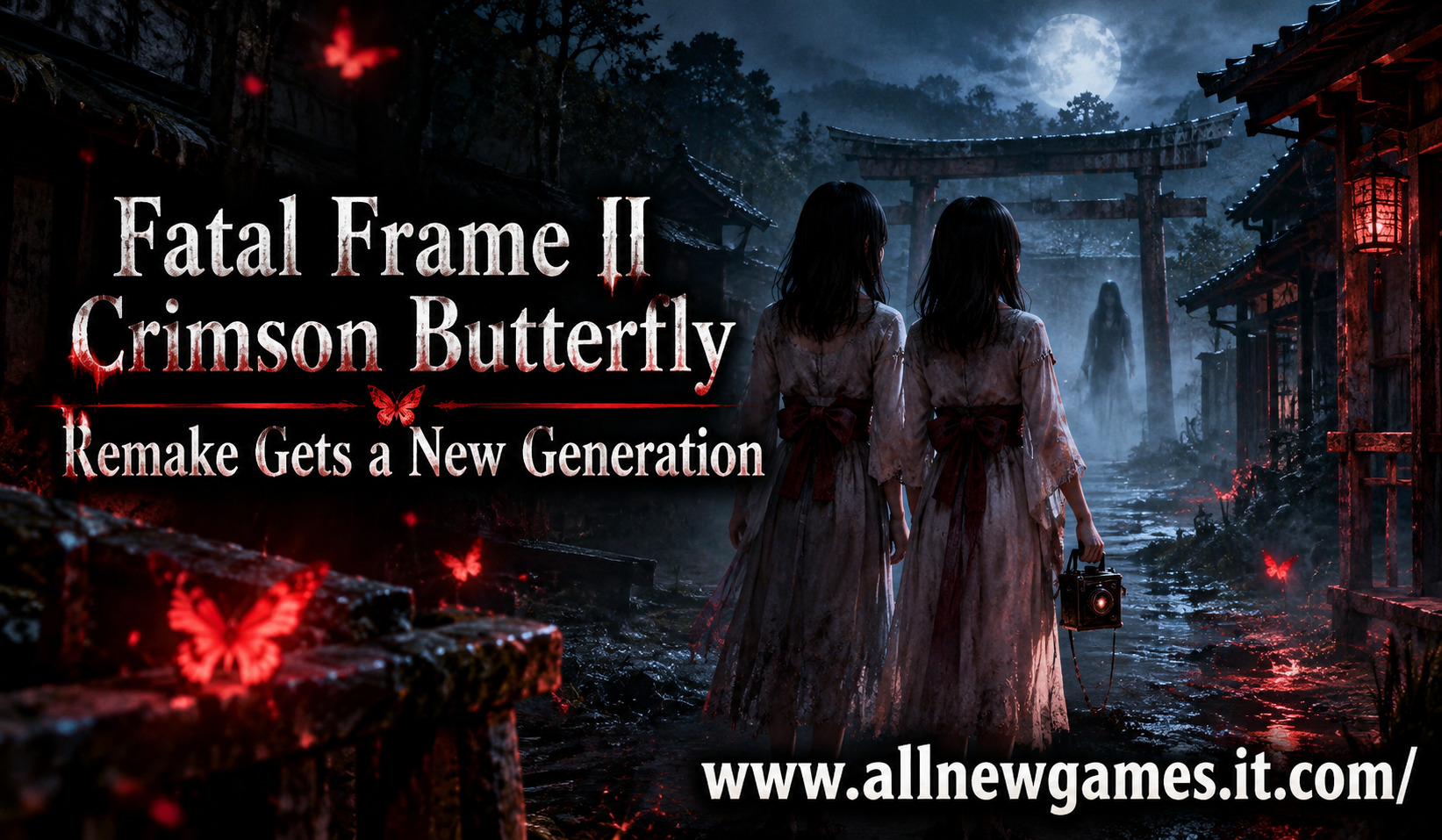
Survival horror games have changed significantly over the years, with modern titles offering realistic graphics, cinematic storytelling, advanced sound design, and more immersive gameplay. However, some classic horror games continue to attract attention because of their atmosphere and memorable stories. Fatal Frame II: Crimson Butterfly is one such title. Its remake introduces the disturbing journey of twin sisters Mio and Mayu Amakura to a new generation of players while giving longtime fans another opportunity to experience one of the genre’s most recognizable supernatural adventures.
Originally released in 2003, the game developed a strong reputation for its unsettling environments, emotional storytelling, and unusual combat system. Instead of relying primarily on conventional weapons, players use a special camera to photograph and fight hostile spirits. This distinctive idea helped separate the series from other survival horror franchises and remains a major part of its identity.
The remake represents an opportunity to bring that original concept into a modern gaming environment. With renewed visual presentation, updated gameplay possibilities, and the enduring mystery of a haunted village, Fatal Frame II: Crimson Butterfly has the potential to connect classic Japanese horror with contemporary audiences.
A Classic Japanese Horror Story Returns
The story follows twin sisters Mio and Mayu Amakura, who become trapped in a mysterious village associated with dark rituals and supernatural events. What begins as an ordinary visit to a familiar location gradually develops into a frightening journey through abandoned houses, narrow pathways, and buildings filled with disturbing secrets.
Mayu follows a crimson butterfly into the village, leading the sisters toward a place that seems separated from the normal world. As they explore, they encounter spirits connected to the village’s tragic past. Their discoveries reveal a disturbing history involving rituals, sacrifice, and the consequences of events that have never truly been forgotten.
The emotional relationship between the sisters is central to the experience. Their bond gives the horror a personal dimension, making the story about more than simply surviving supernatural attacks. Players must also consider the sisters’ vulnerability, their shared history, and the increasingly dangerous circumstances surrounding them.
This focus on relationships distinguishes Crimson Butterfly from horror games that concentrate mainly on action. Fear develops through uncertainty, emotional tension, and the possibility that the sisters may not be able to escape the village together.
For returning fans, the remake provides an opportunity to revisit a familiar story with a renewed presentation. For newcomers, it offers an introduction to a style of horror in which atmosphere and psychological tension matter as much as direct threats.
The Camera Obscura Remains the Game’s Biggest Attraction
One of the most distinctive features of Fatal Frame II is its Camera Obscura. This supernatural camera allows players to confront ghosts by photographing them. The mechanic creates an unusual balance between vulnerability and control because players must face dangerous spirits directly rather than simply attacking them from a distance.
In many survival horror games, combat encourages players to keep their enemies away. Here, the camera often requires them to wait until a spirit approaches before taking an effective photograph. The closer and more dangerous the encounter becomes, the more carefully players must judge the right moment to act.
This approach makes even ordinary encounters feel uncomfortable. Players may have to turn toward a ghost, maintain their aim, and wait for the right opportunity while knowing that the spirit can attack at any moment.
A modern remake has the opportunity to make this system feel more responsive through updated controls, improved animations, and clearer visual feedback. At the same time, preserving the original mechanic’s tension is essential. If combat becomes too easy or predictable, the experience could lose one of its most recognizable qualities.
The Camera Obscura also reinforces the game’s themes. Photography becomes a way to confront hidden history, observe supernatural activity, and understand what happened to the people who once lived in the village. It is both a survival tool and a storytelling device.
Modern Graphics Could Make the Haunted Village More Terrifying
Visual presentation plays an important role in horror, particularly when a game depends on small environmental details rather than constant action. The remake gives the developers an opportunity to present the village with greater visual depth and more detailed surroundings.
Dark wooden houses, deteriorating interiors, narrow corridors, and abandoned rooms can become more convincing through modern lighting and environmental design. Shadows can make familiar spaces appear uncertain, while subtle changes in visibility can encourage players to question what they have seen.
The setting is especially important because the village is not merely a background. Its architecture, objects, and neglected spaces help communicate the history of its inhabitants. A room containing personal belongings can suggest a life interrupted, while an empty corridor may create tension simply because players cannot see what lies ahead.
Sound design is equally important. Footsteps, distant movements, creaking doors, and unexplained noises can make players feel that something is nearby even when nothing appears on screen. Silence can be just as effective, creating an uncomfortable pause before a frightening encounter.
However, better graphics alone cannot guarantee a successful horror remake. The pacing of exploration, the placement of supernatural encounters, and the gradual revelation of information are equally important. The strongest result would combine modern presentation with the unsettling atmosphere that made the original game memorable.
Why the Remake Matters to a New Generation
Players who discovered horror gaming through recent releases may be unfamiliar with the design traditions that shaped earlier Japanese survival horror titles. The remake offers a way to experience those traditions through a more contemporary presentation.
Modern audiences often expect accessible controls, detailed environments, and cinematic storytelling. A remake can update these elements without abandoning the ideas that made the original distinctive. This balance is particularly important for a game whose identity depends on slow exploration, limited resources, and a sense of helplessness.
The return of older horror games also reflects a broader interest in preserving influential gaming experiences. Remakes can introduce classic stories to players who may never have owned the original hardware or had the opportunity to play earlier versions.
For longtime fans, the appeal is different. They may be interested in seeing how familiar locations, memorable encounters, and important story moments have been reinterpreted. They will also pay close attention to whether the remake respects the original’s atmosphere rather than replacing it with more conventional action.
Three elements will be especially important to the remake’s reception:
- Faithful storytelling: Maintaining the emotional relationship between Mio and Mayu and the mystery surrounding the village.
- Meaningful gameplay improvements: Updating controls and presentation while preserving the distinctive camera-based combat system.
- Atmospheric horror: Using lighting, sound, environmental details, and pacing to create fear without relying excessively on sudden scares.
If these elements work together, the remake could appeal to both established fans and players discovering the franchise for the first time.
How Fatal Frame II Stands Apart From Other Horror Games
The survival horror genre includes many recognizable approaches to fear. Some games emphasize resource management and powerful enemies, while others focus on stealth, pursuit, or psychological storytelling. Fatal Frame II takes a different route by making the act of looking directly at a threat part of the challenge.
The camera mechanic creates a memorable contrast: players must observe the supernatural beings that frighten them. Turning away may feel safer, but doing so can make it harder to defend themselves. The game therefore transforms attention and timing into essential survival skills.
Its Japanese setting and folklore-inspired supernatural themes also contribute to its distinctive identity. Rather than relying only on familiar monster designs, the story builds fear around rituals, grief, unexplained events, and the lingering presence of the dead.
The sisters’ relationship provides another point of difference. Their personal connection gives the supernatural mystery emotional stakes, allowing the horror to develop through the story as well as through gameplay.
For the remake, retaining these characteristics will be more important than making the game resemble every other modern horror release. Its uniqueness is one of its greatest strengths.
What Players Should Watch for in the Remake
Interest in the remake will naturally focus on how the developers balance familiar features with modern improvements. Visual upgrades may attract attention first, but gameplay details and the handling of the original narrative could ultimately determine whether the new version succeeds.
Players should pay attention to the following areas as official information becomes available:
- Updated Camera Obscura mechanics, including aiming, timing, and the presentation of spirit encounters.
- Changes to exploration, navigation, and interaction with the village environment.
- The treatment of the original story, its emotional moments, and its supernatural mysteries.
- Performance, accessibility options, and the quality of the experience on supported platforms.
These areas are important considerations rather than guarantees of particular features. Specific technical details, platform availability, and individual gameplay changes should be confirmed through official announcements before players make purchasing decisions.
The Future of Classic Horror Remakes
The return of Fatal Frame II: Crimson Butterfly demonstrates why older horror games remain relevant. A memorable setting, an original gameplay mechanic, and a story built around human relationships can continue to attract audiences long after a game’s first release.
Remakes also present a creative challenge. Developers must decide which elements need modernization and which should remain untouched. Updating controls and visual quality can improve accessibility, but changing too much may weaken the atmosphere that made the original successful.
Horror depends on more than technological sophistication. Uncertainty, anticipation, and the fear of what might happen next are often more effective than spectacular visuals alone. A remake that understands this principle can make a classic experience feel fresh without losing its identity.
For the Fatal Frame franchise, the remake offers an opportunity to renew interest in a series known for its distinctive approach to supernatural horror. Its success could also encourage more players to explore other classic titles that shaped the genre.
Conclusion
Fatal Frame II: Crimson Butterfly remains an important name in survival horror because it combines supernatural mystery, emotional storytelling, and a camera-based combat system that feels different from conventional action. Its remake offers a chance to introduce these qualities to a new generation while allowing longtime fans to revisit the disturbing story of Mio and Mayu.
Modern visuals and updated gameplay can make the village more immersive, but the real test will be whether the remake preserves the atmosphere, vulnerability, and emotional tension that define the original. Players do not simply need better graphics; they need a convincing reason to fear the shadows, explore abandoned rooms, and confront the spirits waiting nearby.
If the remake successfully balances modernization with the spirit of the original, Fatal Frame II: Crimson Butterfly could demonstrate how classic horror experiences can remain meaningful in a new generation of gaming.
Frequently Asked Questions (FAQs)
1. What is Fatal Frame II: Crimson Butterfly about?
The game follows twin sisters Mio and Mayu Amakura as they become trapped in a mysterious village haunted by spirits and uncover the dark history behind its supernatural events.
2. What makes Fatal Frame II different from other horror games?
Its central mechanic is the Camera Obscura, a special camera used to photograph and fight ghosts. Players must often face supernatural threats directly, making combat tense and distinctive.
3. Is the remake suitable for new players?
Yes. The remake is intended to bring the classic experience to a modern audience. New players can discover the story without having played the original, although familiarity with the franchise may provide additional context.
4. Why is the relationship between Mio and Mayu important?
Their relationship gives the story its emotional foundation. Their bond, vulnerability, and struggle to survive make the supernatural mystery more personal.
5. Will the remake have improved graphics and gameplay?
The purpose of a remake is to present an established game for modern players, but individual technical features and gameplay changes should be checked against official announcements.